
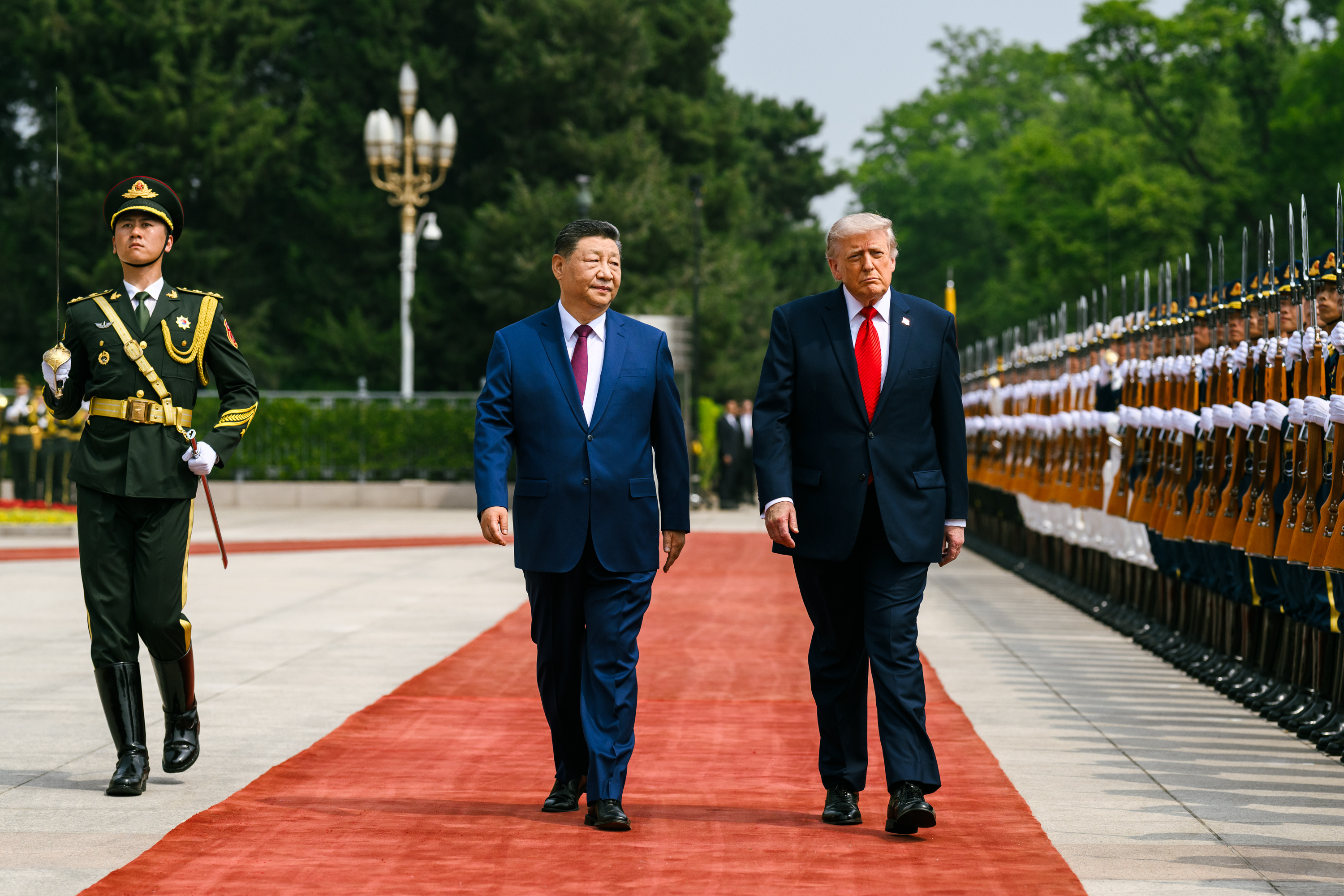
Image Credit: Welcome ceremony for Donald Trump hosted by Xi Jinping, Beijing, 13 May 2026. Photo by The White House, via Wikimedia Commons. Public domain.
Polarization of Narratives on the Global Power Stage
Real geopolitical power today is not measured only by how loudly symbolic rhetoric is echoed in public media, but by how deeply a country can turn economic dependence into bargaining power. The face-to-face meeting between President Xi Jinping of China and President Donald Trump of the United States opens again a crucial space to discuss contemporary shifts in global power balance. Reuters reported that the Beijing summit placed trade, Taiwan, and strategic rivalry at the centre of renewed China-US dialogue. In the increasingly fragmented geopolitical landscape, the interaction between these two largest world economies is no longer only a bilateral issue. The discourse from this meeting draws deep attention from many developing countries in the Global South. For countries in Asia, Africa, and Latin America, the dynamics of Beijing-Washington relations act as a compass that guides their economic and foreign policy, considering the broad influence of both major actors.
Fundamentally, this meeting tests two opposite doctrines of political communication. On one side, the US under Trump’s style still relies on communication patterns based on populist, theatrical, and symbolic rhetoric. On the other side, China approaches the negotiation table with a far stronger bargaining position than before, thanks to consistently combining political narratives with structural economic dependencies. This phenomenon is a perfect test to see how selective political communication not only works as a message delivery but also as a pragmatic geopolitical instrument to turn global uncertainty into national strategic advantage.
China’s diplomatic superiority at the negotiation table does not come from empty space; it roots in its economic influence. Today, Beijing controls central nodes in the global production chain. Before, people laughed at Chinese products, considered them imitations or low-class, and were reluctant to use them. Now, conditions are very different. Most modern industries worldwide are heavily dependent on supply of goods and raw materials from China, a situation created by logistics efficiency, manufacturing capacity, and production costs considered much easier and cheaper. This structural dependency gives China an asymmetric advantage, automatically converting it into real political leverage in every international trade decision and negotiation.
This material advantage is expanded through the Belt and Road Initiative (BRI). Through mega-infrastructure projects, transport corridors, and massive investments involving many developing countries, China transforms its economic power into normative influence in Asia, Africa, and Latin America. In the Indonesian context, BRI cooperation is best understood as a mix of political and economic interests, infrastructure ambition, and national bargaining calculations. Kyoto Review of Southeast Asia. China does not only emphasize partnership rhetoric but provides concrete evidence of development. The narrative is cumulative: combining economic aspects with moral legitimacy as a reliable development partner for the Global South.
Taiwan issues and US populist rhetoric
The most sensitive test in the Xi-Trump meeting is the discourse on Taiwan’s sovereignty. For the Chinese government, the One China Policy is a non-negotiable principle. Beijing firmly rejects any form of international recognition or space for entities intending to separate from Chinese sovereignty, with Taiwan as the main symbol of this principle. In this meeting, Xi Jinping reportedly warned that the Taiwan issue is the most delicate point in China-US bilateral relations, and mishandling it could trigger clashes or open conflict in the Asia-Pacific region, as reported by The Jakarta Post.
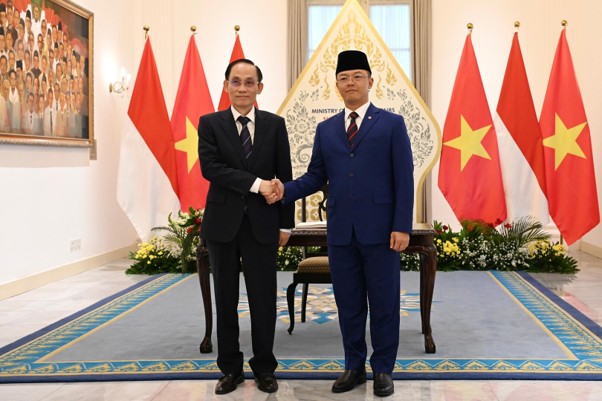
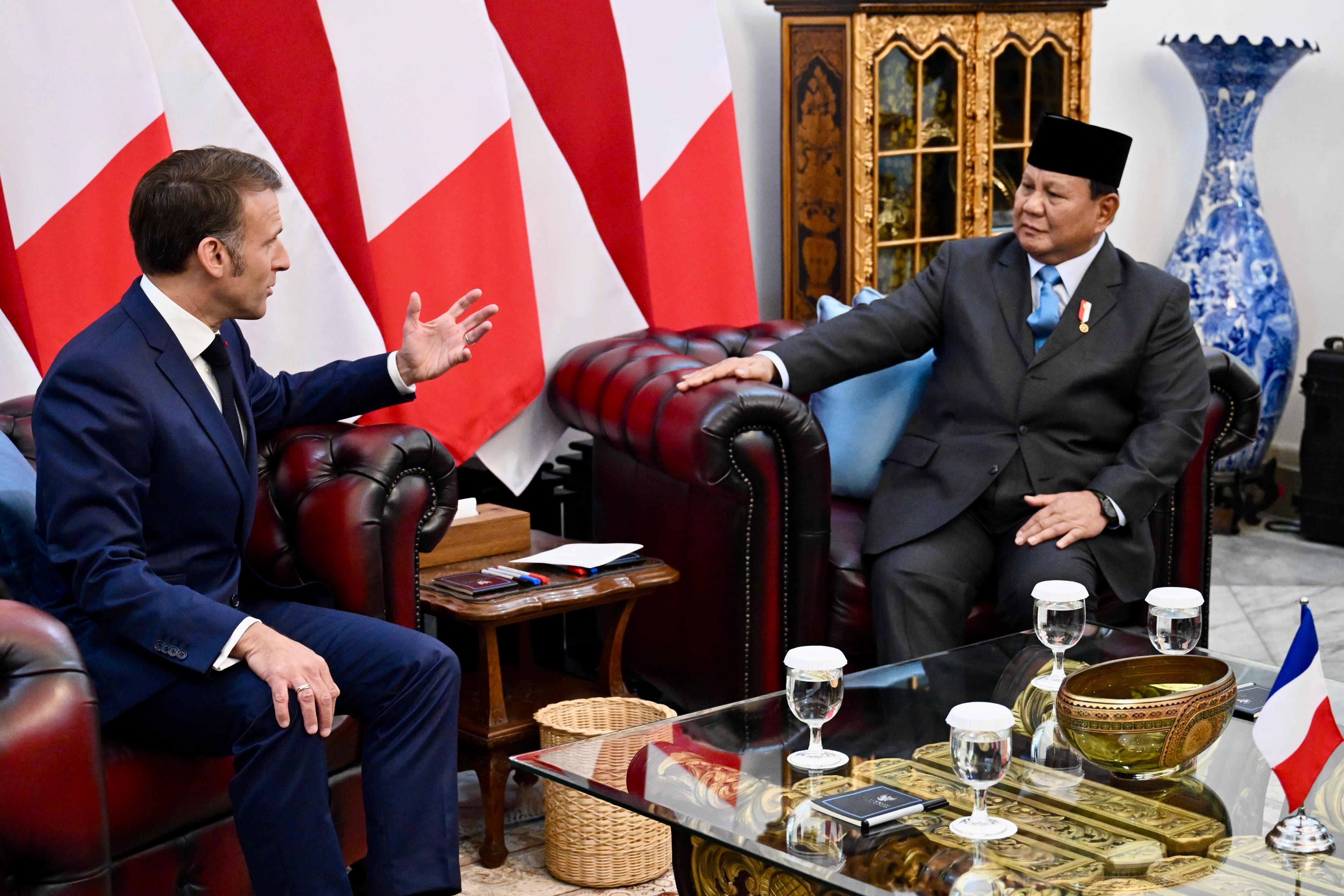
To strengthen its bargaining position, Beijing aggressively practices investment diplomacy in Southeast Asia. This pragmatic approach effectively attracts collective support from many ASEAN countries, which formally maintain relations with Beijing and acknowledge the One China framework in their diplomatic dealings. China’s regional narrative is defensive yet firm: using measured messages to respect shared sovereignty while rejecting foreign intervention, especially military and political interventions from the US. This sensitivity also appeared in the debate over a proposed US military overflight arrangement with Indonesia. Antara news reported that Indonesia was reviewing a US proposal on military overflight access, while the Defense Ministry later stressed that Indonesia had no commitment to provide overflight clearance for the US military. Therefore, rather than presenting the issue as a settled permit, the case is better understood as a still-sensitive proposal involving sovereignty, regional perception, and Indonesia’s tradition of non-alignment.
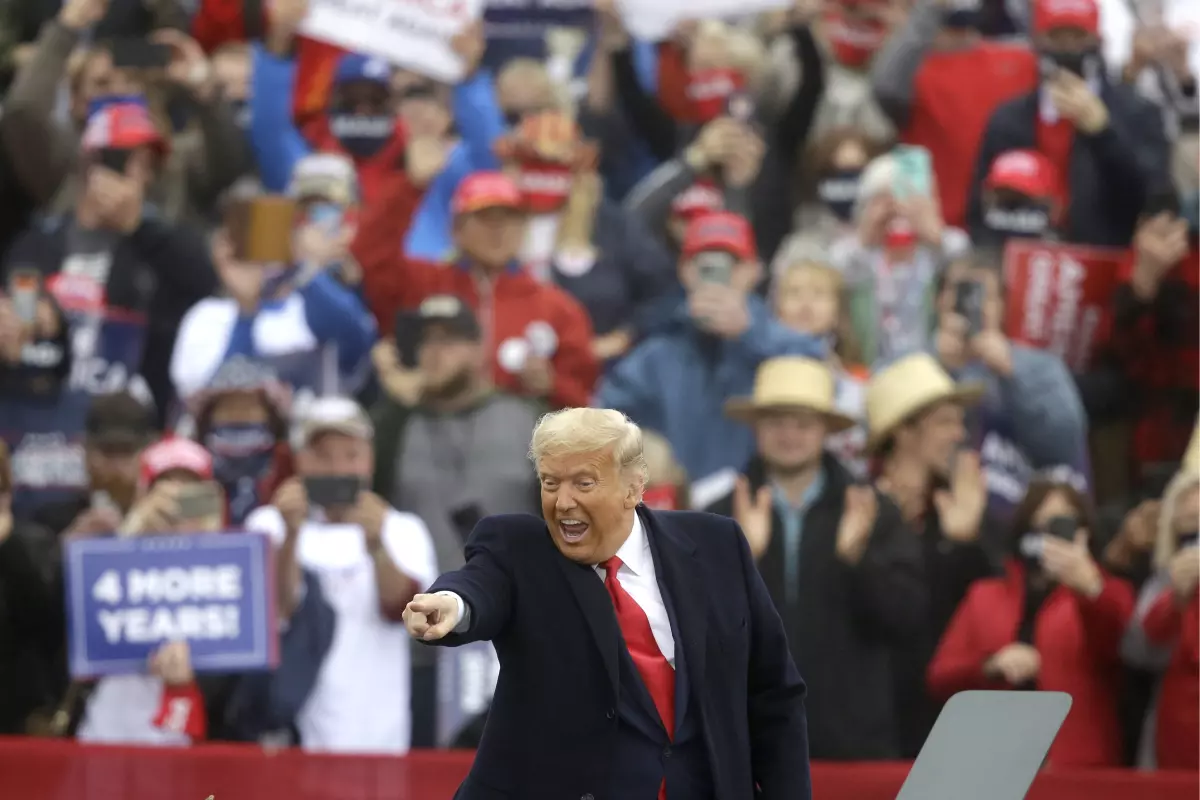
In contrast to China’s structured approach, Donald Trump enters dialogue with fluctuating domestic rhetoric. During his campaign and public speeches, Trump often loudly supported Taiwan to attract sympathy from certain political groups in the US, who see it as an ideological commitment to democratic values. However, the effectiveness of this populist communication meets limits when facing reality in dialogue with Beijing.
In the negotiations, uncertainty in Trump’s foreign policy is clear. Trump had expected Xi to raise the thorny issue of US arms sales to Taiwan, while the status of a package worth up to US$14 billion remained unclear and still awaited approval. Reuters reported this figure as a potential package rather than a finalized sale. In other occasions, Trump complained about the geographical distance between the US and Taiwan and showed reluctance to deploy US military forces if armed conflict truly breaks out.
The peak came post-meeting, when Trump’s position on Taiwan appeared more cautious than his previous campaign-style rhetoric. Rather than giving Taiwan an unconditional security signal, Trump indicated that he had not yet decided on the arms-sale approval and treated the issue as part of a wider negotiation with Beijing. This changing communication pattern shows fundamental inconsistency in US foreign policy. Several times, Trump’s aggressive rhetoric appeared spontaneous, situational, contradictory to his own administration’s official positions, and rarely followed by consistent concrete action.
Digital sovereignty versus digital capitalism
The misalignment between the two countries also appears in discussions on digital economy and technology innovation. In the meeting, Trump deliberately brought US tech company leaders such as Elon Musk, Tim Cook, and Jensen Huang, hoping to open market penetration and secure new cooperation. The Jakarta Post noted that Nvidia’s Jensen Huang joined Trump’s mission to “open up” China, while another report described the market response to Trump’s claimed deals as underwhelming. This failure reveals a deep paradigm clash: the US approach tends to be transactional and driven by corporate sector interest focused on short-term market profit, while China treats the digital sector as a pillar of national sovereignty that cannot be easily negotiated.
This reality reinforces the perception that China’s well-planned, long-term strategic blueprint allows them to effectively manage international pressure. Through strict domestic regulation and systematic technology protectionism, Beijing maintains full flexibility to secure national sovereignty priorities in advanced technology. As a result, China creates a very strong independent digital ecosystem, making it almost impossible for foreign countries, including US tech giants, to inject or dominate technology infrastructure within Chinese territory. The continued uncertainty over advanced chip access in China also shows that even major US technology firms cannot easily separate commercial ambition from Beijing’s regulatory and sovereignty calculations.
Strategic recommendations for ASEAN and Global South
The Xi-Trump meeting provides valuable lessons on the anatomy of international political communication. The reality shows that true global power is not measured by how loud symbolic rhetoric is echoed in public media, but by how a country integrates political narrative with economic diplomacy, supply-chain leverage, technology regulation, and strategic patience. The limited tech agreements and US narrative fluctuations on Taiwan prove that symbolic commitment is always weaker than structured long-term strategy.
For ASEAN and Global South countries, this dynamic must not be passively treated but faced with a balanced pragmatic diplomacy strategy. ASEAN should strengthen regional negotiation capacity collectively to have strong leverage against these two giants. Practically, regional countries must maintain close economic and infrastructure investment relations with China, while also sustaining strategic cooperation with the US in technology, education, and maritime security.
This approach needs support from concrete mechanisms, not only general diplomatic slogans. ASEAN countries should coordinate more clearly through existing regional forums, develop common principles on infrastructure financing, protect digital sovereignty through shared standards on data and platform governance, and diversify supply chains so that no single great power can control strategic decisions. By flexibly, transparently, and nationally-interest-based utilizing economic and technological initiatives from both sides, ASEAN can avoid absolute dependence on either party. This active-independent approach will protect regional foreign policy sovereignty and maximize economic benefits to ensure long-term sustainable stability and growth.

Erik Ardiyanto is a Lecturer in Political Communication at Paramadina University. His research focus about Political Communications, Democracy, Media and Critical Studies.
In this article, Aniello Iannone critically evaluates the ten-year trajectory...
The global order is moving beyond rigid bloc politics toward...
In this article, Luo Chen Jun highlights a striking historical...
In this article, Muhamad Ferdy Firmansyah highlights how climate technology...
In his latest article, Aniello Iannone examines the gap between...
This article analyzes Indonesia's ambitious military modernization through its strategic...
DeepRare is being hailed as a major breakthrough in the...
This article analyzes President Prabowo’s decision to skip the June...
This article analyzes the phenomenon of "sibling rivalry" at the...
This article evaluates the normative frameworks offered by China’s four...
This article examines the 2025 Thailand–Cambodia border conflict to evaluate...
This article examines the May 2026 ASEAN Summit in Cebu...
This article examines the May 2026 Beijing summit between Xi...
This article examines how the rise of narcissistic foreign policy—exemplified...
In October 2025, Indonesia's President Prabowo Subianto announced that Portuguese...
This article argues that recent U.S.–Israel military actions against Iran...
This article examines Türkiye’s evolving "Third Way" in Africa, an...
This article critically examines Indonesia’s evolving role from a quiet...
This article provides a firsthand account of how Pakistan emerged...
This article examines how disruptions in the Strait of Hormuz...
This article examines Indonesia’s participation in the Board of Peace...
This article examines what the attempted sale of CK Hutchison's...
This article examines the Kudankulam Nuclear Power Plant as a...
This article examines Nepal’s strategic position within the Indo-Pacific and...






-20260514.jpg)
Leave A Comment